According to the Consul of Ukraine in Scotland, Andrii Madzianovskyi, as of April 2026, 29,781 Ukrainians are living in Scotland, the vast majority of whom arrived in the northern part of the United Kingdom following the outbreak of the full-scale war. A significant proportion came under the Super Sponsorship Scheme, which was specifically developed by the Scottish Government for Ukrainians in the spring of 2022. Others arrived through sponsorship and family visa routes.
All Ukrainians hosted by Scotland were granted residence permits for an initial period of three years, which were subsequently extended by an additional 18 months. The next step will be a further extension of visas for another 24 months.
Under the Super Sponsorship Scheme, at the beginning of the full-scale war in Ukraine, the government provided Ukrainian refugees with accommodation in 3–4 star hotels (initially with three meals a day, later reduced to two), as well as access to healthcare, education, and employment. Moreover, Ukrainian youth were given a unique opportunity to study at Scottish universities free of charge.
To put this into perspective, such an opportunity is normally available only to Scottish residents. If other UK nationals (from England, Wales, or Northern Ireland) enrol in Scottish universities, they are required to pay tuition fees. International students from other countries also pay tuition fees, typically at significantly higher rates.
Ukrainians were granted the same status as local students, and during the summers of 2022, 2023, 2024, and 2025, hundreds of Ukrainian students enrolled in Scottish universities in Edinburgh, Glasgow, and Dundee. In addition, hundreds more enrolled in colleges, where they study English free of charge under the ESOL (English for Speakers of Other Languages) programme.
Those who do not receive financial support through the Universal Credit scheme are eligible for college bursaries, typically £500 per month (approximately 30,000 UAH), with some receiving £700–£800, with colleges also partially covering their housing costs.
From the very beginning, Ukrainians received an exceptionally warm welcome from the Scottish people. From temporary hotel accommodation, many were relocated into social housing—fully furnished apartments equipped with appliances such as washing machines, as well as basic household items including dishes and bedding. These efforts were coordinated by local councils.
Ukrainians shared their stories of adapting to life in the remarkably beautiful Scotland with Maksym Rozenko.
From Kyiv to AUGB Glasgow
Seventeen-year-old Kyiv native Vladyslava received a special New Year’s gift from her employers during a corporate celebration on the eve of 2022: she was informed that she had successfully passed her probation period at Budhouse Group and would continue working as a Marketing Department Specialist.
At the time, Budhouse Group’s portfolio included three shopping and entertainment centres across Ukraine—in Kharkiv, Kherson, and Cherkasy—as well as the four-star Khortytsia Hotel in Zaporizhzhia. For a girl who had not yet turned eighteen, this was an extraordinary start to her career. She was the youngest employee at Budhouse Group while simultaneously completing her studies at the KROK University College. However, February 24, 2022, brought harsh changes to the lives of millions of Ukrainians—and Vladyslava was no exception.
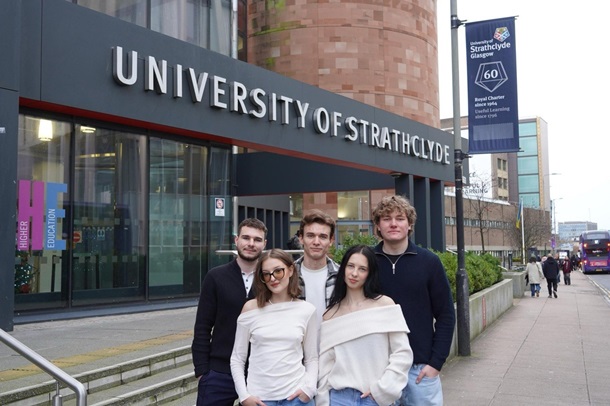
In the spring of 2022, Vladyslava and her large family applied for the Scottish Government’s Super Sponsorship Scheme. However, she only arrived in Alba (the Scottish Gaelic name for Scotland) a year later. Upon arrival, she realised that her English was not as strong as she had thought, so she improved it by completing an ESOL Advanced course at West College Scotland. In 2024, she enrolled at the University of Strathclyde, where she has now completed her second year. In May 2025, she joined the team of AUGB (Association of Ukrainians in Great Britain) Glasgow.
Below is Vladyslava’s own account:
I joined AUGB Glasgow as an Events and Social Media Coordinator. We implement initiatives aimed at integrating and socialising Ukrainians in Glasgow, organising both weekly activities and cultural and educational events.
Among our regular activities are a sewing club, a women’s mental health support group, a board games club, and English language classes. One of the most popular initiatives is the English class for elderly people (our oldest “student” is 88 years old). Elderly individuals are particularly vulnerable: it is more difficult for them to learn a new language and adapt to a new environment. Despite this, they attend regularly, as for many of them it is their only opportunity for social interaction in a new country.
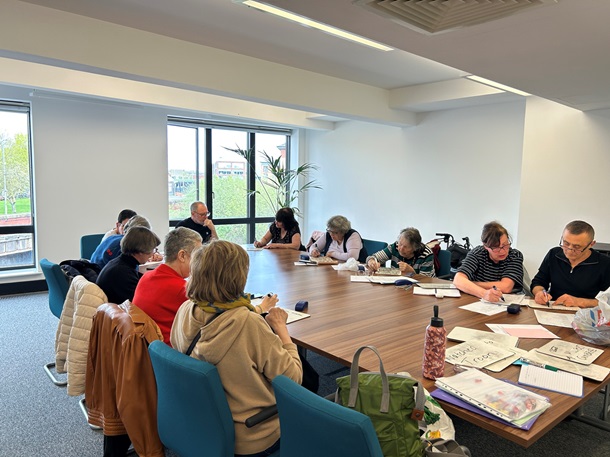
We also place special emphasis on children by organising art classes and Ukrainian language lessons. Many children who moved to Scotland at a young age are now more fluent in English than in Ukrainian, so we aim to help them maintain a connection with their culture and language. We have also created and support a Ukrainian futsal team that competes in the Scottish futsal league.
In addition to regular activities, we organise lectures, themed celebrations, and large-scale cultural events. The biggest of these is the Ukrainian Independence Day celebration, which for four consecutive years has brought together several hundred Ukrainians and local residents in central Glasgow. Preparations typically take three to four months.
The programme includes not only cultural performances but also sports activities in the park—from yoga to tennis and pickleball—for both adults and children. One of the highlights of last year’s celebration was Ukrainian borshch: together with volunteers, we prepared 40 litres, which ran out long before the event ended, with particular interest shown by local residents.
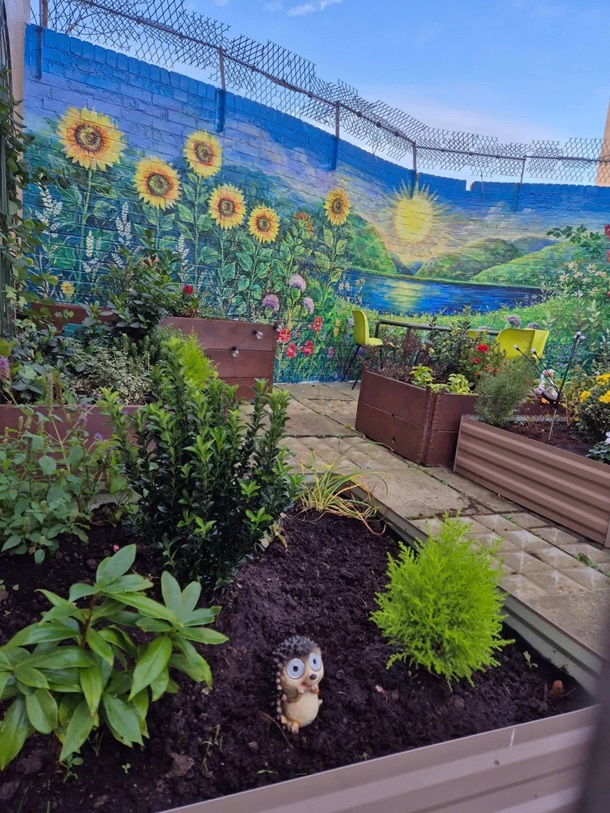
Another impactful project was our collaboration with a local housing association where many Ukrainians live, as well as a local organisation established by Ukrainian tenants. Together, we transformed a neglected area near the building into a community space: we created a mural with the participation of children from our art classes, planted flowers, and landscaped the area. Overall, the organisation remains open to new initiatives—anyone can come forward with an idea, and we help bring it to life.
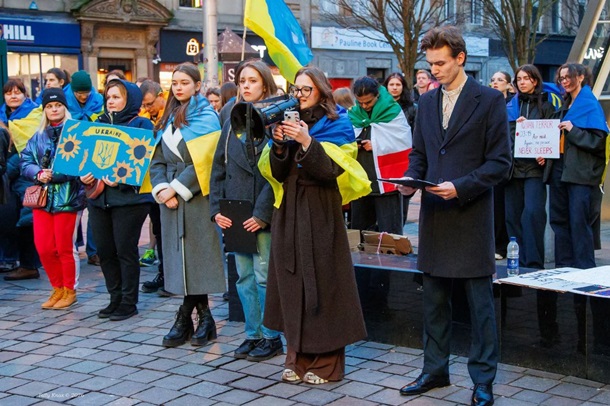
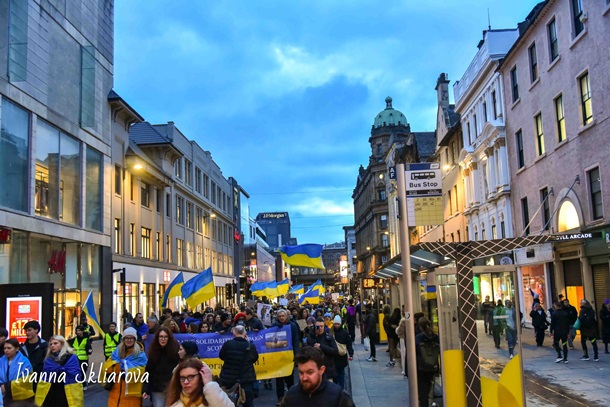
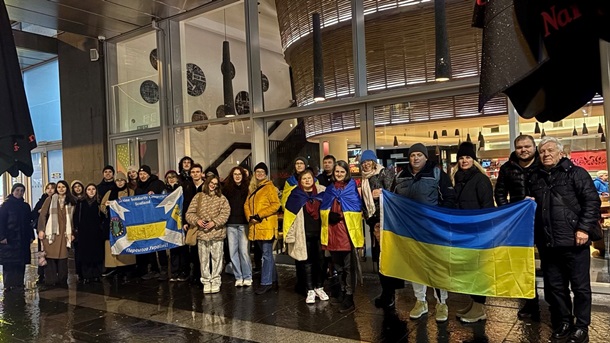
AUGB Glasgow is also responsible for organising demonstrations in the city. For the fourth anniversary of the full-scale war, I was involved in organising a series of memorial events, including a demonstration, a march through the city, and a commemorative event at Glasgow Cathedral featuring performances by Ukrainian artists. The theme of this year’s demonstration was the illegal deportation of Ukrainian children by Russia. At least 400 people participated, including many Scots.
This year, we plan to expand our activities, including:
creating a social club for elderly people as a dedicated space for connection;
opening a library of Ukrainian books, which are currently difficult to find in Scotland.
It is important to note that the organisation operates on grants, and committee members work on a voluntary basis alongside their main jobs. They all clearly understand how important it is for Ukrainians in Scotland to have a place where they can receive support and, even if only briefly, feel at home.
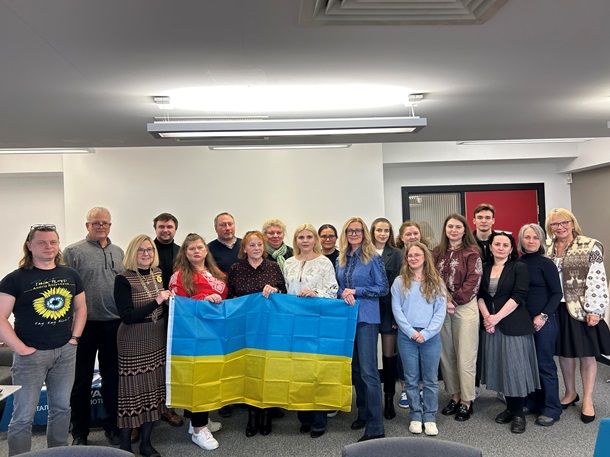
At the same time, I am a committee member of the Ukrainian Society at the University of Strathclyde, where I study Marketing. There are three such student societies in Glasgow—one at each university—and we organise events to help Ukrainian students socialise and to promote Ukrainian culture.
One of our largest events was a traditional Ukrainian “vechornytsi”—a charity evening with music, where all proceeds from ticket sales were donated to support Ukraine. It was an opportunity both for the Ukrainian community to come together and for locals to learn more about Ukrainian culture. Notably, the venue provided the space free of charge after learning that the event was a fundraiser for Ukraine, stating that they could not charge us rent for such a cause.
Our committee consists of five members, and I serve as the Events Manager, responsible for organising activities. This work is voluntary but deeply meaningful to me, as I clearly remember my own experience of adapting to a new country, when everything felt unfamiliar and overwhelming. Now, I strive to help others navigate this path more quickly.
Another important aspect for me is fostering collaboration between large Ukrainian organisations and student communities. When I first arrived in Scotland, I felt a disconnect between these two environments: student initiatives operated somewhat separately from community organisations such as AUGB Glasgow, despite the strong potential for cooperation.
Through my current work, I effectively bridge this gap. This allows us to engage students in broader community initiatives while also making AUGB Glasgow’s work more visible to young people. For example, during the organisation of events marking February 24, student communities provided a significant number of volunteers to coordinate the march and demonstration. We also decided that students would speak on stage as one of the most proactive parts of the community, with one representative from each university. I coordinated this process and also delivered a speech on behalf of my university.
Additionally, at my initiative, we joined forces to celebrate Ukraine’s Unity Day by organising a “chain of unity” on one of Glasgow’s bridges over the River Clyde. This symbolic gesture brought together Ukrainians of different ages and backgrounds and helped build collaboration between youth and the largest Ukrainian organisation in Glasgow.
Alongside this, I also participate in other initiatives. This year, I became part of the committee of the Language Café, a university society where students gather to learn foreign languages. Last year, I spent the entire year studying Spanish within the society, and this year I decided to join the committee to help develop the community and promote cultural exchange on campus.
Grant for Participation in the Refugee Festival: “Life in One Suitcase” Performance
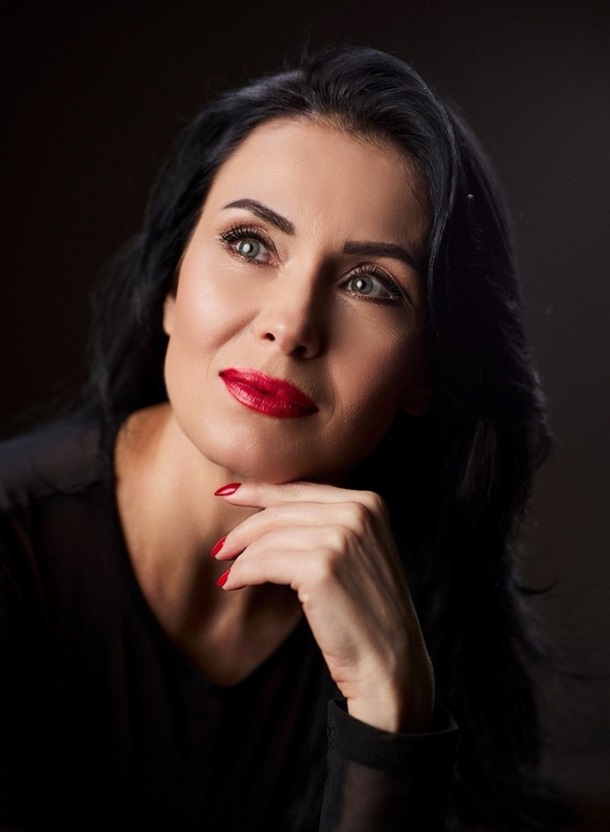
Before the full-scale war began, Oksana Saiapina ran her own dance studio in Obukhiv, Kyiv region. She moved to Scotland with her two children in the summer of 2022 under the Super Sponsorship Scheme.
Oksana, who holds a педагогical degree and has 20 years of experience in the cultural sector, began her work at a venue in Edinburgh in September 2022, with the support of AUGB Edinburgh. The first performance of the children’s group Kvity Ukrainy took place at Christmas. Together with two
Looking ahead, Oksana plans to open and lead a Ukrainian dance school in Scotland, offering classes in acting (including stage makeup), choreography across multiple disciplines, and professional training delivered by qualified specialists to pass on their expertise to children.
How a Large Ukrainian Family Adapted to Life in GlasgowUkrainian women, Saiapina also founded an adult professional group, Flowers of Ukraine, and later established another ensemble for young, ambitious dancers from Ukraine—TvorchiUA.
Oksana has been collaborating for a long time with two charitable organisations: AUGB Edinburgh and Mission of Innocents. They provide her with space and conditions for conducting classes, thereby supporting the development of Ukrainian culture and children’s arts. Thanks to this support, classes for children are free of charge.
She now has access to a fully equipped dance studio, which was ceremonially opened a few months ago in the presence of representatives of the City of Edinburgh, the Consul of Ukraine in Scotland Andrii Madzianovskyi, and consuls from other countries.
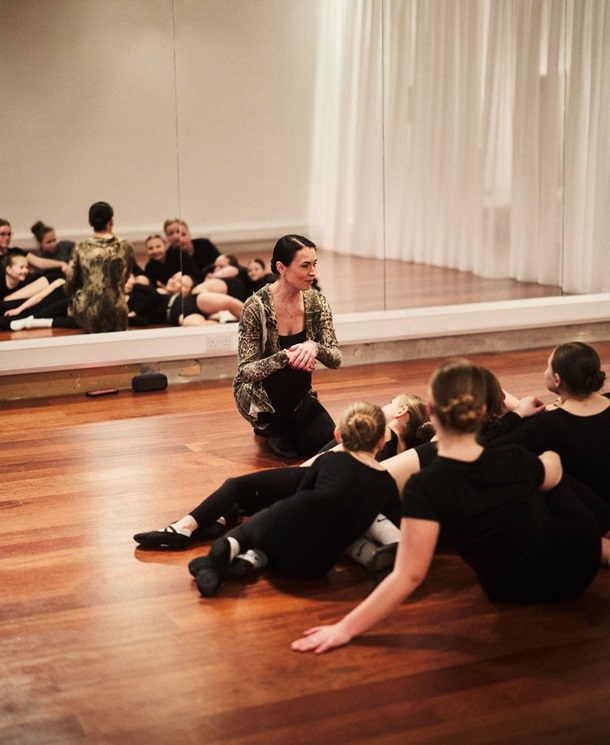
As of 2026, around 35 Ukrainian children aged 6 to 18 train with Saiapina, divided into three age groups. Classes take place four times a week: once for acrobatics and three times for dance and choreography. The programme includes classical and folk dance as well as contemporary styles.
“Integration into another society leaves its mark—many children are already beginning to think in English. Unlike adults, children adapt quickly. My work is focused on helping them preserve their Ukrainian roots. This is my personal goal while I am here,” Oksana explains.
Today, Kvity Ukrainy performs frequently, including at charity events raising funds for Ukrainian soldiers, particularly for medical supplies and equipment. The group also performs at Scottish concerts and festivals, including international ones.
Saiapina is the creator, scriptwriter, and director of the emotional performance Life in One Suitcase, which tells the story of Ukrainians forced to leave their country due to the war. She brought together creative groups from Edinburgh, Coatbridge, and Glasgow for this project. The performance, involving up to 70 Ukrainian refugees, has already been staged four times in Edinburgh—first at the Refugee Festival 2025 and later at the Fringe 2025. Notably, when applying to participate in the Refugee Festival 2025, she—supported by Mission of Innocents—won a grant to develop and produce the performance.
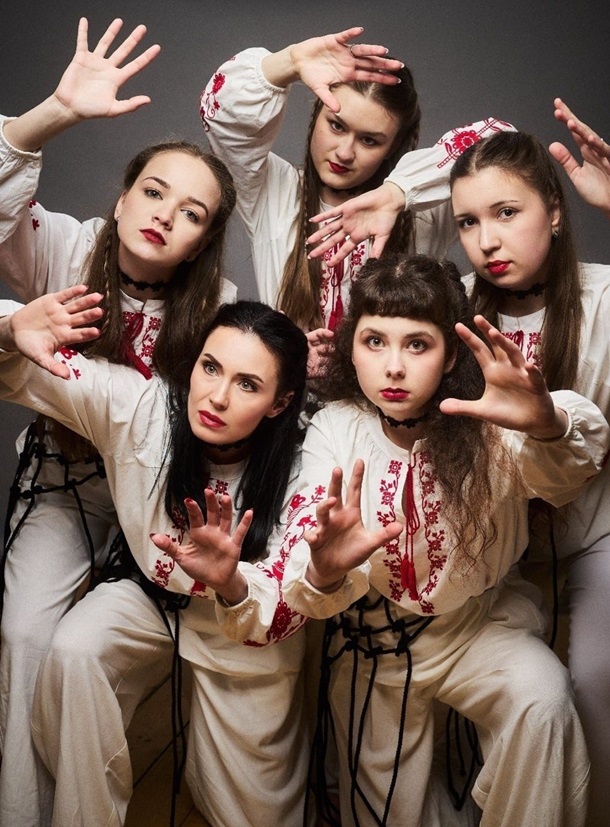
Looking ahead, Oksana plans to open and lead a Ukrainian dance school in Scotland, offering classes in acting (including stage makeup), choreography across multiple disciplines, and professional training delivered by qualified specialists to pass on their expertise to children.
How a Large Ukrainian Family Adapted to Life in Glasgow
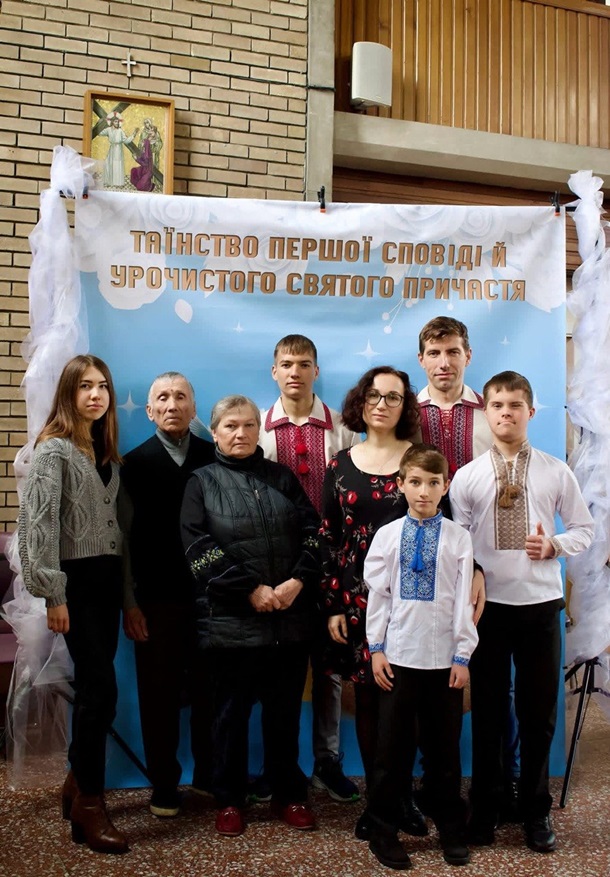
Olena and Rostyslav are raising four children, including a son with a disability. In Ukraine, Rostyslav was a private entrepreneur specialising in lift maintenance. The family moved to Scotland in the summer of 2022 under a sponsorship visa. At the time, their daughter Kateryna was 18, Yaroslav 16, Anton 14, and Maksym 9.
“Our sponsors—a Scottish couple who hosted us—greatly helped us adapt to life in a new country. The local church, Milton of Campsie Parish Church, immediately welcomed us into the community and, for the past four years, has begun every service with the words ‘Welcome’ in Ukrainian,” says the eldest daughter, Kateryna.
Rostyslav found work almost immediately, initially washing dishes in a restaurant. A year later, he moved to a full-time position at a care home for people with disabilities. He now plans to improve his English further and have his engineering diploma in lighting technology officially recognised.
At the same time, Rostyslav and Olena have been studying on an ESOL (English for Speakers of Other Languages) course at college for three years and have reached an Upper-Intermediate level. Their children learned English much faster—the youngest son, Maksym, now speaks with a noticeable Scottish accent.
Their daughter Kateryna is a co-founder and president of the Ukrainian Society at Glasgow Caledonian University, where she and fellow students organise a variety of cultural events: the annual Unissued Diplomas exhibition (dedicated to students killed in the war), folk art workshops, traditional vechornytsi gatherings, and participation in peaceful demonstrations in support of Ukraine.
Eighteen-year-old Anton sings and serves at a Ukrainian Greek Catholic church.
Their eldest son, Yaroslav, has a disability, and Olena is his primary caregiver.
“Yaroslav has far more opportunities and prospects in Scotland,” Olena says. “He now attends three different types of activities. In Ukraine, after finishing school, there were no such opportunities available.”
In 2024, Olena’s parents also moved to Scotland. Her 75-year-old mother, Vira, a professional artist, conducts art workshops; just this week, she taught Petrykivka painting to students at Glasgow Caledonian University. With the help of children attending activities at AUGB Glasgow, she also created a vibrant mural with Ukrainian motifs on a building in Glasgow.
Her 82-year-old father, Volodymyr, was diagnosed with Alzheimer’s disease in Scotland and is receiving treatment to slow its progression. He attends a day care centre three times a week.
As a family, they actively participate in organising Ukrainian community events in Glasgow.
text by Maksym Rozenko