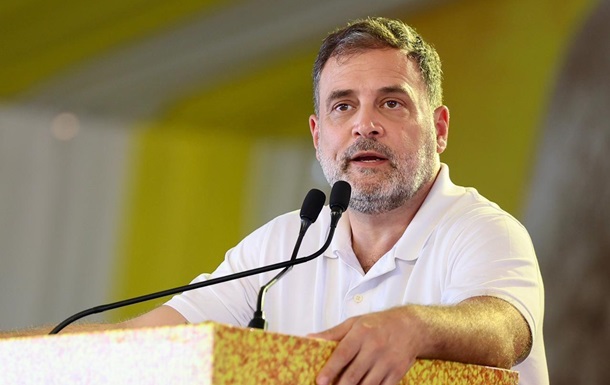
Rahul Gandhi Addressing a Gathering in 2026
A Sr Joyrnalist, who closely monitors North Indian politics, observation sums it all. "The ongoing SIR is a modern iteration of the forced sterilization program carried out under Sanjay Gandhi during
Piyem Narayanan and Ratnesh Dwivedi fron New Delhi
The purity of the electoral roll is a measure of a democracy's health. The Election Commission's Special Intensive Revision (SIR) aims to sanitize the voter list by eliminating anomalies—such as duplicate entries, deceased voters, and outdated records. In principle, nobody would oppose a flawless electoral roll; it is the very foundation of free and fair elections.
However, government policy must be evaluated not solely by its stated objectives, but by how it is implemented on the ground. Problems become deeply complicated when this purification process turns into a nightmare for ordinary people.
A Sr Joyrnalist, who closely monitors North Indian politics, observation sums it all. "The ongoing SIR is a modern iteration of the forced sterilization program carried out under Sanjay Gandhi during the Emergency! While the goal back then was population control, the methods used were deeply alarming. The SIR is breeding a similar kind of anxiety and resentment among the public. Delaying the realization of this fact will cost the government dearly."
It is worth adding here that this observation comes from someone who has never hesitated to praise the achievements of the Narendra Modi government.
Where is Digital India?
We live in a country that successfully managed the registration, vaccination, and digital certification of over a billion people during a pandemic. The government possesses the requisite digital infrastructure, databases, and administrative machinery to verify citizens' details rapidly. Yet, the Election Commission is failing to utilize this modern efficiency effectively.
Instead, the Commission is shifting the entire burden onto the citizen, demanding proof that their name existed on the electoral rolls a quarter of a century ago. Today, the SIR has devolved into a convoluted and archaic process, leaving people tangled in a web of endless application forms and unresponsive web portals.
This is precisely why 13 crore voters found excluded themselves from the initial draft list. Many of those removed are individuals who have actively cast their ballots in all recent elections.
The Mother of Twins
This is exactly what is driving the common man to the brink. Anyone would laugh—or despair—at the ordeal of a housewife in East Delhi: "This process doesn't seem designed to assist the voter; rather, it feels built to interrogate them."
This was the frustrated reaction of a mother whose two sons received notices because the system mandates a minimum nine-month age gap between siblings. Logically, as a general rule, that holds up. But her exasperated question is: "How do I make this portal understand that they are twins !!
This is not an isolated incident. Citizens' fundamental rights are currently caught in a labyrinth of portals that counter-ask for OTPs, confusing form numbers, and indifferent officialdom. A large demographic is scrambling just to prove they are Indian citizens with the right to vote.
The government is essentially telling its people: Your right to vote stands revoked until you can prove your eligibility.
For an ordinary citizen, this is not merely an inconvenience—it is a profound insult. It is a matter of self-respect.
Protecting the fundamental democratic rights of citizens is the absolute responsibility of the state. Even if the stated objective is to clean up the voter lists, when it starts encroaching upon ordinary lives, a silent resentment brews within society. A process originally intended to safeguard voting rights is ironically creating a dangerous climate of distrust across the nation. This anxiety transcends political affiliations, and it is this very unrest that is now spreading like wildfire through the streets of Delhi.
Although it was the ordinary citizens who first took to the streets to protest, the opposition parties quickly joined them after realizing how widely this unrest was spreading. Reactions pouring in from states like Karnataka indicate that the ruling front shares this exact same apprehension. With the courts also intervening and making their stance clear in recent days, the writing is on the wall: things will not be easy for the Election Commission. Will the government temporarily back down, leaving Chief Election Commissioner Gyanesh Kumar to face the music? We will have to wait and see.
Regardless, it is certain that the opposition will weaponize this issue in the upcoming Uttar Pradesh elections early next year. Half a century ago, the public retaliated against Indira Gandhi's population control measures by decisively voting her out of power. History, after all, has a habit of repeating itself.
Рубрика "Блоги читачів" є майданчиком вільної журналістики та не модерується редакцією. Користувачі самостійно завантажують свої матеріали на сайт. Редакція не поділяє позицію блогерів та не відповідає за достовірність викладених ними фактів.